
Highest Magnesium Foods for Daily Energy and Deeper Sleep
6/22/20243 min read
Looking to boost your energy, support muscle function, and improve your overall well-being?
Incorporating magnesium-rich foods into your daily diet is one of the most effective ways to hit your wellness goals—but simply eating them isn't the whole equation. While vibrant green vegetables, hearty legumes, whole grains, and even dark chocolate are naturally packed with this essential mineral, your body's ability to absorb magnesium depends heavily on how these foods are prepared. Because plant staples contain natural compounds called phytates that can block mineral absorption, understanding nutrient bioavailability is the real secret to unlocking their full health benefits.
Magnesium is essential for the proper management of ion channels, specifically calcium channels. While calcium causes your muscles to contract, magnesium acts as a natural blocker, allowing muscle tissue to relax.
400–420 mg per day for adult males and 310–320 mg per day for adult females may help regulate blood pressure, maintain glycemic control, and balance insulin sensitivity.
The most efficient way to maintain robust magnesium homeostasis (balance) is by eating a diverse, whole-food diet. Plant-based foods—specifically seeds, nuts, legumes, and dark leafy greens—offer the highest concentrations of bioavailable magnesium.
Pumpkin seeds (pepitas) and chia seeds are arguably the most concentrated dietary sources of magnesium available. Just a single handful of pumpkin seeds supplies over a third of your entire daily requirement. Almonds and cashews double as fantastic grab-and-go options that deliver healthy fats and fiber alongside a dense mineral profile.
Because magnesium sits at the absolute center of the chlorophyll molecule (the pigment that gives plants their green color), green veggies are naturally rich in this mineral. Cooking greens like spinach or Swiss chard wilts the leaves and condenses the volume, allowing you to consume significantly more magnesium per serving than eating them raw. Legumes, Whole Grains, and Dark Chocolate, Complex carbohydrates like quinoa, black beans, and brown rice provide a steady release of glucose while steadily contributing to your daily mineral goals. And for a healthy indulgence, high-percentage dark chocolate is naturally rich in magnesium, making it an excellent functional treat.
Simply eating these foods isn't the whole equation. Your gut has to successfully absorb the minerals. Plant-based staples like grains, nuts, and seeds naturally contain phytates (phytic acid), anti-nutrients that can bind to minerals in your digestive tract and reduce their bio-availability.
Top Magnesium-Rich Foods:
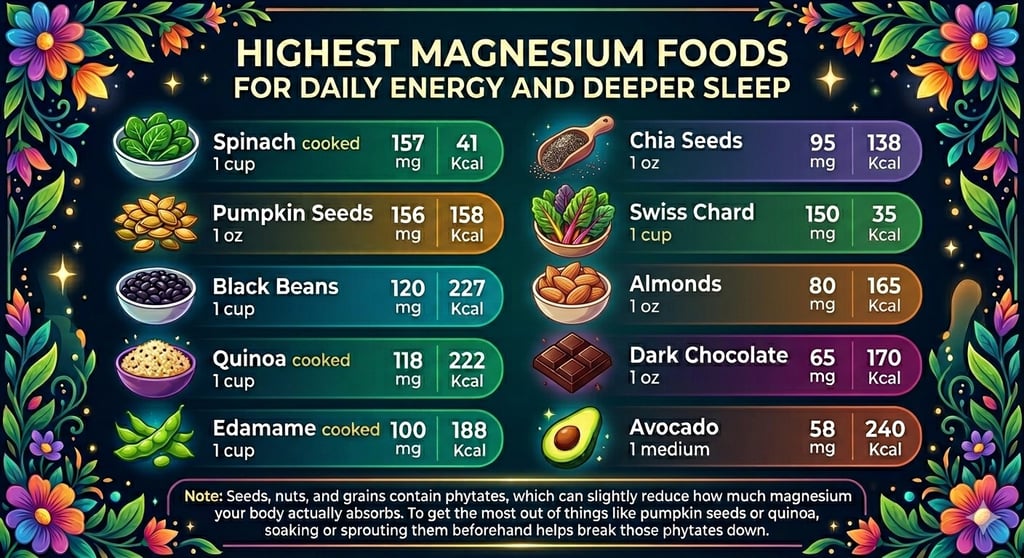
Here are the highest dietary sources of magnesium, ranked by density, to fuel your days and deepen your nights:
Pumpkin Seeds (Pepitas)1 oz (approx. 30g)~150–160 mg Packed with tryptophan, the amino acid precursor to melatonin.
Chia Seeds1 oz (approx. 30g)~95 mg High in omega-3 fatty acids, which support healthy sleep architecture.
Dark Chocolate (70%+)1 oz (approx. 30g)~65 mg Rich in polyphenols. Best eaten midday for an energy boost without the late-night caffeine interference.
Almonds / Cashews1 oz (approx. 30g)~75–80 mg Healthy fats that stabilize blood sugar and prevent nighttime cortisol spikes.
Spinach (Cooked)½ cup~80 mg Cooking breaks down oxalates, making the magnesium and folate more bioavailable.
Black Beans1 cup (cooked)~120 mg Complex carbs and prebiotic fiber that feed sleep-supportive gut microbes.
To ensure you are getting the most nutritional value out of your food, try incorporating these preparation strategies: Soak, Sprout, or Ferment: Soaking raw nuts, seeds, and legumes in water overnight activates an enzyme called phytase, which naturally breaks down phytic acid and unlocks the bound magnesium.
Adequate vitamin D levels help improve the overall efficiency of mineral absorption throughout your small intestine.
Excessively high intakes of supplemental zinc or calcium can compete for the same cellular pathways in your gut, potentially lowering how much magnesium your body takes in at one time.
Maximizing your intake of the highest magnesium foods is a fundamental, science-backed strategy to elevate your systemic health, stabilize your daily energy, and prevent nutrient deficiencies. By mindfully adding pumpkin seeds, dark leafy greens, whole grains, and avocados to your regular grocery rotation, you can seamlessly meet your metabolic demands without relying solely on synthetic pills. Keep your focus on a diverse, minimally processed, whole-food diet to unlock the broad spectrum of cellular benefits this vital mineral has to offer. Your body will thank you for the clean, consistent fuel.
NaturesLifeBalance.com
*Important Note & Disclaimer: Always check with your medical doctor before changing any lifestyle, nutrition or supplements. This site does not offer medical advise it is only for research or reference.
Request a Monthly Newsletter - Natures LIFE Balance!